Anatomy of a trauma
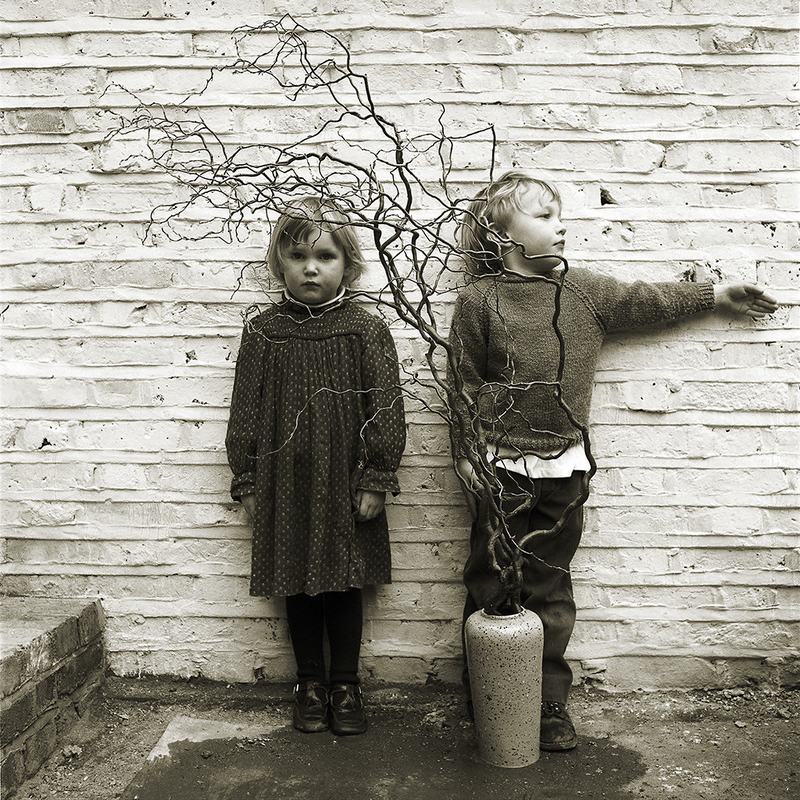
"Children" by Daska, licensed under CC BY-ND 2.0.
Published: August 23rd 2023
© stopchildabuse.gr
READ ALSO
- 22/08/2026 The mandatory joint custody law in Greece denies access to the child's Tax ID Number and disability benefit
- 04/08/2026 Fathers' Rights Movement: Misogyny, Anti-Feminism, and Violence
- 01/08/2026 Tsiaras Law: How much women's blood can a piece of legislation hold?
- 25/07/2026 New rules could ensure courts consider domestic abuse in separation settlements
- 23/07/2026 Five years are enough: Declaration for the repeal of the law for forced joint custody in Greece
- 25/08/2023 The vicious cycle of secondary and repeated victimization of mothers and children who experience domestic violence, and the role of Patriarchy in maintaining and reinforcing it
A psychotherapist speaks publicly for the first time about the sexual abuse she suffered as a child, shedding light on multiple facets of a collective trauma
SOURCE
- Author(s):
- Ioanna Bratsiakou
- Publish date:
- 12/07/2023
- Source:
- KATHIMERINI
- Original article link:
- Read the original article
ORIGINAL TEXT
"It happened from when I was 9 until I was 11, at my grandmother's house, under a sheet, while my mother let me spend lovely moments with them." Psychotherapist Kyriaki Mertzani reveals publicly for the first time the sexual abuse she suffered during her childhood at the hands of a person from her close family circle.
We are in the welcoming space of Baumstrasse in Votanikos. She is flanked by two women who have spoken openly about their own abuse at a young age, Olympic medalist Sofia Bekatorou and visual artist Dora Kotsi-Felitsi. Even so, her agitation is evident. "I'll apologize for the knots that are still in my voice," she says.
At the mere thought of sharing her experience, she caught herself "having frozen." Thinking of the attacks that Sofia Bekatorou and other women who spoke out as part of #MeToo received, she wondered whether she herself would be traumatized again through verbal attacks because she would speak out. "But I understand that today, here, I won't only be speaking about my own trauma. I'll be speaking about society's trauma. I'll be speaking about the collective trauma, and I will invite us to be the people who limit the reproduction of the attack that all of us women who have the courage, as survivors, to express what happened to us, face," she stresses.
15 years of silencing
The first attack she suffered was from her mother. "At some point I found the courage to explain to her why I no longer wanted to go to my grandmother's house. When I revealed the incident to her and who was involved, my mother's reaction was to grab me by the hair and drag me into the room. She grabbed the broom handle and started hitting me wherever she could. Even when it broke on my back, she kept hitting me with the broken piece of wood. I don't know how long it lasted. 'You'll stay here all night, I'll lock you in the room until you stop lying,' she said."
The little girl remained locked in her room for two days. "She only brought me water, that was my punishment. And after two days I stopped talking. I couldn't utter another word about what had happened to me. Fifteen years of silencing followed, with many psychosomatic symptoms, vomiting, dizziness, and frequent throat pain. My voice would close up whenever I wanted to find the courage to speak about something. I remember going to take my driving test and my hand was shaking so much that the examiner came over and said, 'girl, did you kill someone? Don't be so nervous!' What could I tell him? That it was connected to my trauma? I was a trauma. For many years, I was trauma."
A child who has suffered sexual abuse struggles with the survival instinct for their entire life, as they carry the belief that they are to blame for everything.
Ms. Mertzani explains that for all these years she hadn't realized that what happened to her was rape. "You know, a minor child who is sexually abused, especially through play, cannot grasp the psychic rupture that is being committed in that moment. Especially when the perpetrator is a first-degree relative. The child's mind tries to organize what it cannot connect, and organizes it in a somewhat scattered way. It turns it into a kind of normalcy because the rapist commits it with full awareness and commits it through play. Because that's the only way he can touch the child's soul. Do you know that a child who has suffered sexual abuse struggles with the survival instinct for their whole life? As they carry the belief that they are to blame for everything. Do we know the struggle this child endures into adult life? That what they are searching for is a mouth, a word, a voice, that will tell them: "it's not your fault". That's what I was struggling for. To hear a mouth, to hear a voice tell me that it wasn't my fault."
The silence that re-traumatizes
She apologizes again for her agitation. "Even though I've worked through it, I still feel..." She tries to explain, but the audience "interrupts" her with loud applause. The audience, however, had not been so warm from the start. Ms. Mertzani's testimony had been preceded by that of Ms. Felitsi. A detailed description of the rape she suffered at age 19 by her professor. "Are there any questions?" she said, after finishing her account. Silence.
"This silence is what shapes the trauma in victims' psyches," noted Ms. Mertzani, taking up the baton. "And it is also a social silencing that we are reproducing here right now, and I wonder if some people have frozen up or if some feel warm. I hope you can bear my experience too."
"I understand why you didn't speak at first. I couldn't bear Dora's testimony and at first I stepped outside," says Sofia Bekatorou, explaining how this was later reversed. "I thought, if you can't bear it, how will all these people bear it? How will they leave here and carry what they heard, if we ourselves can't manage to bear it? And so I came back into the room."
According to the WHO, 1 in 5 women and 1 in 13 men report having been sexually abused during childhood.
She herself points out how important it is for the traumatic experience to be spoken about in a properly framed space by people trained to listen. "Because there, every survivor will be able to receive the care and attention they need," she tells "K," explaining that if a person wants to speak openly from the start to any audience, it is inevitable that they won't receive the support they need in the way they need it, and may even harm others if those others haven't been warned about what they will hear. "By this I mean that we never know other people's experiences and what may surface when we tell our own story. For this reason it's important to stress that, for our own good and for the good of others, the support framework we need to seek out is with mental health professionals."
Ms. Bekatorou also stresses that reporting abusive behaviors in the media and on social media is aimed mainly at the institutions and structures of our society. "When we report by name the lack of procedures for managing incidents of abuse in the workplace, in the arts, in sports, we do it because it is dangerous to keep living with such significant gaps, which not only cost all of us psychologically but also cost our state financially. So social pressure creates an indirect form of pressure on political leadership to move toward new ways of managing violence that ensure prevention and citizens' health."
Violence passed down from generation to generation
According to the World Health Organization, one in five women and one in 13 men report having been sexually abused during childhood, while approximately 120 million girls and young women under the age of 20 have experienced some form of forced sexual contact. A child who suffers abuse is more likely to be abused as an adult or to abuse other people, meaning that violence is passed down from one generation to the next. It is therefore extremely crucial to break this cycle of violence, with multiple benefits for future generations. However, child abuse often remains hidden. And so, only a small percentage of child victims of mistreatment receive support from health professionals.
Kyriaki Mertzani never received the support she needed as a child. But even when, as an adult, she attempted to work through her trauma with a psychotherapist, he was unable to cope with the process, displaying an indifference that was highly re-traumatizing for her. "We never resolved it, even though I asked him directly," she tells "K." At a later point she tried to discuss the issue in a therapy group, but there too she faced a verbal attack. "Within the group therapy, all the members reproduced the social pattern, where some attack, some are indifferent, some sympathize but don't show it, and some, if they speak, get attacked," she notes. The result was that she left the therapy group. "He is competent, with very good knowledge in what he does, but he is unable to connect with and touch my trauma," she says of her psychotherapist. "The most important point in trauma therapy is for the therapist to have psychological resilience and empathy," she stresses.
Sofia Bekatorou, herself a psychoanalytic psychotherapist, believes that this particular therapist probably reacted this way because of his own personal experiences. "A victim of abuse can be re-traumatized, or may not be able to close their trauma, if the psychotherapist themselves has not first done their own personal analysis before starting to work with other people," she emphasizes. "So it's important to turn to professionals, after first researching and verifying, through other people as well, the psychoanalytic ethics of the psychotherapist. And of course, if we find that something isn't working and we don't feel comfortable in the process, it's also important to look into that and turn to another specialist."
When children speak, but the system doesn't know what to do
But what happens when specialists lack either the training or the resilience to support a child victim of abuse? And how do the authorities, police and judicial, respond when a child finally speaks? "On a collective level, I think we refuse to take on the responsibility that falls to the individual, to the group, to the systems," notes Kiki Petrouklaki, psychologist, president of the European Network Against Violence, who together with Sofia Bekatorou created the #MeNow_MeToo initiative for recording incidents of abuse and supporting victims. Speaking to "K," she notes that over the last two years in Greece, especially the younger children have started speaking out immediately. However, the response of the system that should be ensuring their protection is, at the very least, inadequate. "Young children are growing up learning that it is their right to speak and that they have nothing to be ashamed of because someone did something to them that they had no right to do," explains Ms. Petrouklaki. "These children speak. But the system doesn't know what to do. And then a second Calvary begins, a very big and very long one, which requires money, psychological endurance, and people by your side," she stresses. "Because the truth is that if you go and watch three, four, five trials, they are conducted on the basis of the reasoning: 'I'll catch you making fun of and lying about and accusing this above-suspicion man of being a rapist.'"
"Who told you that an abuser looks like a monster?"
Sofia Bekatorou also shares her own experience from courtrooms. "One of the worst realizations I've had is that in courtrooms they look for a specific victim profile. That is, they say, 'you don't look like a victim.' Not just to me. This is a sentence that victims who reach the courts hear. As if the victim or the perpetrator has a certain appearance. And who told you that a victim can't have achievements? That they can't have a career? That they can't have a successful family? And of course, who told you that an abuser looks like a monster? He could be any one of us. He could be from within our own family or the most trusted person in a community. At some point, then, we must stop focusing on what a perpetrator or a victim looks like and focus instead on how we will create a social fabric that invests in respect, solidarity, and acceptance. It is not harsher sentences that will change our attitude, but education and the swift administration of justice."
I am here for you
Despite the re-traumatization by her mother and her psychotherapist, Kyriaki Mertzani made the final decision to speak out and publicly reveal the trauma of the abuse she suffered as a child, when the roles were reversed and she found herself in the position of the psychotherapist. Then, one of her clients spoke to her about a similar experience of his own. "Sexual abuse may be reported at a higher rate by women, but I won't hide from you that I have often wondered, how many men are there who haven't confessed it? And how many men are carrying this stigma?" says Ms. Mertzani, before ending her talk, referring to her father.
"I was lucky enough to have a father who was illiterate, but when I was little he used to tell us so many fairy tales, without the man even knowing any fairy tales. His stories were the experiences he had lived, since he had been orphaned of both parents at the age of five. He was born in 1934. He and his stories, without him knowing it, were what gave me the compass and the lighthouse that allowed me to endure. Because I won't hide from you that I have always admired, and still admire, this father who managed to survive in very difficult circumstances."
Machine-assisted translation, reviewed and edited by a human.
READ ALSO
- 22/08/2026 The mandatory joint custody law in Greece denies access to the child's Tax ID Number and disability benefit
- 04/08/2026 Fathers' Rights Movement: Misogyny, Anti-Feminism, and Violence
- 01/08/2026 Tsiaras Law: How much women's blood can a piece of legislation hold?
- 25/07/2026 New rules could ensure courts consider domestic abuse in separation settlements
- 23/07/2026 Five years are enough: Declaration for the repeal of the law for forced joint custody in Greece
- 25/08/2023 The vicious cycle of secondary and repeated victimization of mothers and children who experience domestic violence, and the role of Patriarchy in maintaining and reinforcing it