Believe the children
How and why the Greek authorities systematically fail to protect children who are victims of sexual abuse. The State's obligations, the role of the "experts", the mandatory joint custody lobby and gender discrimination within institutions.
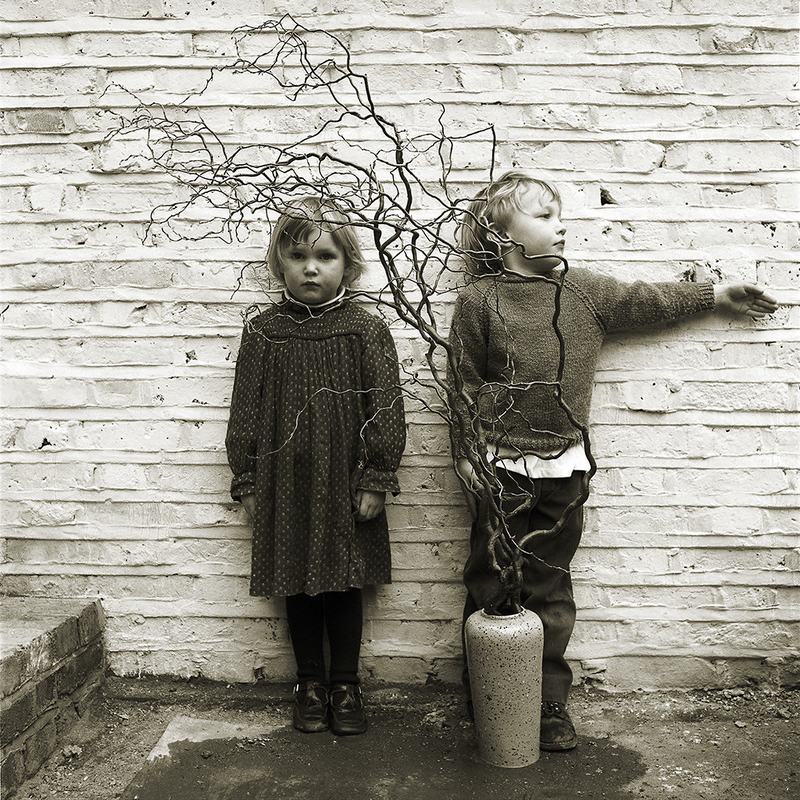
"Children" by Daska, licensed under CC BY-ND 2.0.
Published: September 28th 2026
© stopchildabuse.gr
READ ALSO
- 12/10/2026 Why don't children report abuse before they turn 18?
- 03/12/2024 Urgent recommendation from GREVIO to Greece
- 22/03/2024 Prosecutor Maria-Eleni Nikolou and the patriarchal class courts.
- 08/10/2023 Legal rules establishing the obligation to report child abuse and neglect
- 08/10/2023 History Taking in Sexual Abuse: Anatomical Dolls
- 04/06/2023 UN Recommendation: legally prohibit the use of "parental alienation"
About one in five children in Europe is a victim of some form of sexual violence, according to Council of Europe data. In nine out of ten cases, the perpetrator is someone from the child's close family or social circle. In Greece, according to a study by the Institute of Child Health, the rate reaches 16%, that is, about one in six children.[1]
Every child who reports sexual abuse has a different story. The way Greek authorities treat these children, however, is largely the same: inadequate at best, dangerous and punitive at worst. What follows are snapshots from the everyday lives of hundreds of women and children in Greece.
What happens when a child discloses sexual abuse
Events usually unfold as follows: the child discloses that they have been sexually abused by their father and/or another person close to the family. If the child has a supportive mother or another supportive person in their close circle, a report may be made to the authorities. This rarely happens, however: only a very small share of child sexual abuse cases ever comes to the attention of the authorities or of any other service (fewer than 2 in 100).[2]
And that is when the ordeal begins for the child and their mother.
The father and his lawyers will claim that the child is lying because the mother has manipulated the child in order to alienate them from their father. In other words, they will use the legal ploy for defending abusers known in public discourse as "parental alienation syndrome" or simply "parental alienation".[3] They do not need to prove it. They will vaguely claim that the mother wants revenge on the father, and that is usually enough. Indeed, a study of more than 2,000 court decisions in the United States found that when the father claims "parental alienation", courts reject the mother's abuse allegations at almost twice the rate.[4]
As the court date approaches, the father's lawyers will take up residence on "friendly" television shows, where they will rail against anyone who has dared to defend the mother and child.[5]
Once the father's side claims "parental alienation" —and this happens in almost every case where a child has reported sexual abuse— a very specific mechanism is set in motion by the police, the prosecution service and the judiciary.
The child will have to recount their traumatic experience many times: first to the police, possibly also at the Child's House, then to judicial officers and to experts appointed by the prosecutor or the court.[6]
At the police station, the child's statement will resemble an interrogation. They will be pressured with trick questions, doubted, and offered other interpretations of what they experienced: "maybe he was trying to wash you?", "maybe he wanted to show you how much he loves you?" — often despite the child's persistent insistence to the contrary. All of this, of course, in breach of the forensic interview protocol for child victims.[7]
A forensic medical examination will be ordered, even months or years after the alleged incident. Never mind that, according to the relevant guidelines, forensic evidence must be collected within 72 hours at the latest and, in prepubertal children, within 24 hours.[8] And even if the examination is carried out in time, the absence of findings does not mean the child has not been abused.[9]
If the forensic examination —which is often not completed because of the child's reaction[10]— shows nothing, this will become a key element of the case file and a weapon in support of the father's claim of "parental alienation". Forensic findings are rare in child sexual abuse cases (fewer than 5% of cases).[11] If there are findings, however, they will be disputed, and there will be an attempt to discredit the forensic report as well.
The juvenile prosecutor[12] may order the child to be interviewed at the Child's House —the specialised service provided for by law for the examination of abused children— or may not. They may send the child to another public service, a hospital or a mental health centre, or even to a private practitioner on the register of court experts, even though a Child's House operates in the same region, in breach of the Code of Criminal Procedure and of the forensic interview protocol for child victims.[13]
The child may end up with a professional who specialises in child sexual abuse and who will listen to them with respect and empathy, following the required protocol. They may also end up with a responsible professional who declines to take the case because they lack the relevant specialisation.[14]
There are few professionals who meet these requirements. Most of them, however, now refuse to take on such cases. They have watched colleagues with similar qualifications receive threats and lawsuits and be publicly smeared by lawyers, certain journalists and the mandatory joint custody lobby, in particular media outlets and on television shows, with the tolerance of the state.[1]
In most cases, the child will end up with non-specialist professionals who will also treat them more or less as an investigating authority. They will produce an opinion stating that the mother has put the allegation into the child's head. This opinion may not even explain how the "expert" concluded that the child "suffered parental alienation" and that the personal experiences they describe in great detail are the product of the mother's manipulation. The "experts" may even examine the child in the presence of the accused father.[16]
In other cases, lengthy reports will be produced that seem to come straight out of the dystopian manual of the inventor of the pseudo-theory of "parental alienation" —and apologist for intrafamilial child sexual abuse— Richard Gardner.[17]
If the child is relatively calm, they will be said to show a coldness that does not match the experiences they describe. If the child is not calm, they will be said to be putting on an act. There is a specific list of arguments that the "experts" use to discredit children who report abuse. Either way, what the child describes, however many times they do so, consistently and in detail, will not be heard.[18]
These private experts, although appointed by the prosecutor or the judge, will demand exorbitant fees from each parent separately, of up to €8,000. They will already have met many times with the father alone and will be in regular contact with him.[19] The mother will feel trapped: she will fear that if she cannot find the money to pay these exorbitant fees, the expert will turn against her in the report and label her an alienator. And in the end, the expert will do so anyway.
The authorities will rely on the expensive opinion of the private expert who finds that the child's account has been suggested to them, or on multiple reports by different technical advisers, depending on the father's financial means. They will ignore any opinions that do not mention "parental alienation". They may even ignore the report of the Child's House, the body primarily responsible for the forensic interviewing of child victims of abuse.[20]
They will tell the child who is asking for protection that they do not believe them. They will tell the child that their dad is very cooperative and kind, and that children need to see both their parents. They will tell the child that since the forensic report showed nothing, what they describe did not happen. They will tell the child that since there are no witnesses, they cannot be telling the truth. And this even though child sexual abuse is a crime committed behind closed doors, where there are almost never any witnesses.[21]
Then the effort to restore the child's relationship with the father will begin — the so-called "reunification therapy". The child will be sent to a public or private service, where an expert will take charge of them with the aim of breaking down the child's refusal.[22] Often, the same service will also be working with the father.
And then the day will be set when the child must have a joint session with the father, the man they are terrified of. The child will refuse emphatically and may even be locked in the private expert's office. The expert will reprimand the mother for being unable to discipline her child. The expert will tell the child that by refusing they are breaching a court order. If the mother has come with a court bailiff to record what is happening, the expert may even call the police — all of this in front of the child.[23]
The private expert or the juvenile prosecutor may recommend that the child be confined to a public hospital, where only the father —the person the child has reported as their abuser— and his relatives will be allowed to visit. The prosecutor's order may even provide that the father's technical adviser will visit the child in the institution in order to prepare the child for reunification with the accused father.[24] There, the child will be forbidden from seeing the parent with whom they feel safe: their mother.[25]
The next civil court decision will order that the child must see their father, or will even award custody to him. On the criminal side, the prosecution may still be under way, and often the case will be closed or the judicial council will issue an order of non-prosecution. Even if the father has been convicted at first instance, he may well be acquitted on appeal on grounds of doubt.[26]
The mother's health will steadily deteriorate, and she will no longer have money for doctors, to look after herself.
The mother will accumulate sentences for breaching court decisions while trying to protect her child from the alleged abuser and from the state apparatus that backs him. Each breach is punishable separately by up to three years' imprisonment and, depending on how many complaints the father has filed against her, these sentences may add up to as much as 20 years. Each time, she will be given a suspended prison sentence.[27]
As far as we know, despite these prison sentences, no mother trying to protect her child has gone to prison in Greece — yet.
An entire system is designed so that mothers who try to protect their children are one breath away from prison. And the children, from an institution — if they refuse to go with the father they have reported for abuse. We have even seen the lawyers of some of these fathers shouting on television that a mother who breaches two court decisions on contact should lose custody.
Law 4800/2021 and the systematic violation of children's rights by the Greek authorities
The "Tsiaras law" stripped away even the few safeguards that mothers had in cases of domestic violence. The law names domestic violence and sexual abuse as improper exercise of parental responsibility only if the accused father has been convicted by a final court decision — something that rarely happens. For the mother trying to protect her child, by contrast, "culpable non-compliance" with a court decision is enough for her to lose custody or even parental responsibility.[28]
The Istanbul Convention, which Greece ratified in 2018 (Law 4531/2018), expressly provides in Article 31 that incidents of domestic violence must be taken into account when determining custody and contact, and that the exercise of contact and custody rights must not jeopardise the safety of the victim or the children.[29] The requirement of a final conviction is hard to reconcile with this obligation. Until a conviction comes —if it ever does— the child is forced into contact, sometimes even overnight stays, with the parent they have reported as their abuser.
The National Action Plan for the Protection of Children from Sexual Abuse and Exploitation (2022–2027) provides for mandatory training of judges and prosecutors in the principles of child-friendly justice. A fundamental principle of child-friendly justice is the participation of the child: the child's right to express their views freely and "the obligation of the judicial system to take children's views seriously into account". The Plan itself calls for "establishing the child's perspective as the dominant one" in proceedings that concern them.[30] The pseudo-theory of "parental alienation" runs counter to these principles, as it discredits the child's views by attempting to present them as the product of manipulation.
GREVIO, the Council of Europe's group of experts that monitors implementation of the Istanbul Convention, called on the Greek authorities in 2023 to ensure that judges and other relevant professionals are trained on the lack of scientific basis for "parental alienation syndrome" and similar concepts, such as suggestibility. In an urgent recommendation, it also called for an end to the practice of removing children from non-violent parents, or restricting their parental rights, on the basis of these concepts.[31]
Despite the provisions of the National Action Plan and GREVIO's recommendations to the Greek authorities, a 2022 paper by Ioannis Valmantonis, now a judge of the Athens Court of Appeal, remains online on the website of the National School of Judges as seminar material on domestic violence. The paper presents "parental alienation" as a form of domestic violence and describes allegations of child abuse "usually by the mother" as "the rising judicial weapon, particularly against the husband-father".[32] Valmantonis repeated the same views on "parental alienation" and false allegations in March 2025 at an event of the Athens Bar Association.[33]
In June 2026, at a one-day conference on "high-conflict divorces" organised by the Hellenic Society of Child and Adolescent Psychiatry, the head of the Juvenile Division of the Athens Public Prosecutor's Office, Aikaterini Mitrou, gave a presentation on "parental alienation", and the head of the Social Service of the Athens Society for the Protection of Minors, Athina Manouka, gave one on "false allegations of sexual abuse".[34]
False allegations of child sexual abuse are rare: in the major studies on the subject, their rate ranges from less than 1% to about 5%, while abuse that is never reported is far more common — fewer than 2 in 100 cases come to the attention of the authorities (see note 2). Even in divorce cases, where the rates appear higher, deliberately false allegations do not come mainly from mothers.[35] Moreover, the closing of a case or an acquittal on grounds of doubt does not mean that the allegation was false (see note 26).
Nor does the claim that an expert can "implant" a false memory of abuse in a child have any scientific basis: according to the international literature, this would require complex experimental set-ups and the cooperation of the person themselves, while there is no scientific consensus that it is even possible to suggest to children false memories of traumatic events, such as sexual abuse.[36]
The fate of child victims of sexual abuse is still decided in the courts on the basis of pseudo-theories.
Epilogue
Pseudo-theories such as "parental alienation" or the possibility of implanting false memories offer the state apparatus the perfect alibi for disciplining and punishing children and mothers who dare to challenge paternal authority. They are also a lucrative market for certain lawyers and technical advisers at the expense of children and their mothers, and that is why they are abhorrent. It is easy money, because as pseudo-theories they require no evidence or scientific proof.[37] The claim alone is enough. If it is accepted in court, everything that follows is a foregone conclusion.
This dystopia is fuelled in particular, though not exclusively, by a specific political stance and view of child-rearing: that of "black pedagogy".[38] It is no coincidence that misogynist, fundamentalist, ethno-patriarchal formations openly support the so-called movement of "alienated parents" —many of whom have been reported for abuse by their own children— while calls for punishing children and subjecting them to strict discipline grow ever louder.
No one claims that there are no parents who try to turn their children against the other parent. This practice, however, is rarely one-sided, and it is more often used by the very parents who, as a rule, perpetrate domestic violence and coercive control within the family — the overwhelming majority of them men.[39] Mothers who protect their children, and who may themselves be victims of domestic violence, often try in every way to encourage the children's contact with their father, even when the children refuse. They have been raised on phrases such as "Honour your father" or "Whatever he has done, he is your father and you must respect him". They have also heard Giannis Loverdos of New Democracy say in Parliament, during the debate on the Tsiaras law, that an abusive husband can be a good father.[40] Until they find out, of course, that the father is abusing the children too.
The ground on which these stories unfold is the difference in power and resources between parents within the heteronormative family. In patriarchal Greek society, it is as a rule the man who is socially and economically more powerful — even in a poor family, his social connections will be stronger.[41] And this power imbalance is reproduced intact in courtrooms and in court decisions.
We do not write these stories only to grieve. We write them from a place of anger, determined to win. We call on all women —and on everyone who, as children, could not speak— to join the campaign to repeal the Tsiaras law. Because children must be heard.
Believe the children.
FOOTNOTES
- National Action Plan for the Protection of Children from Sexual Abuse and Exploitation 2022–2027, Presidency of the Government (updated March 2023), pp. 4–5, citing the Council of Europe's ONE in FIVE campaign and a 2011 study by the Institute of Child Health with a sample of 15,320 pupils. According to the study, 16% of children in Greece have experienced some form of sexual abuse. In 7.6% of cases this involved sexual violence with physical contact, and in 3% rape or attempted rape.
- According to the same study, cases that came to the attention not only of the prosecution and police but of any health, welfare or education service amounted to just 0.07% of estimated cases, "a rate corresponding to fewer than 2 in 100 child survivors" (National Action Plan 2022–2027, p. 5; our translation).
- See UN recommendation: legislate to ban the use of "parental alienation" and The World Health Organization refuses to include parental alienation in the International Statistical Classification of Diseases.
- Meier, J. S., Dickson, S., O'Sullivan, C., Rosen, L. & Hayes, J. (2019). Child Custody Outcomes in Cases Involving Parental Alienation and Abuse Allegations. GWU Law School Public Law Research Paper No. 2019-56. The study, funded by the National Institute of Justice of the US Department of Justice, also found that courts are most sceptical when mothers allege child abuse. See also "Justice is not blind, it has pockets".
- See the reports by the journalism team The Manifold, e.g. Petros Kousoulos: The truth behind the "coincidences". The National Action Plan 2022–2027 provides for specific reference in the Single National Protocol to the protection of children's personal data and rights when the media cover news about their sexual abuse (p. 28).
- The state itself acknowledges that the child is subjected "to repeated statements/assessments that re-victimise them" (National Action Plan 2022–2027, p. 19; our translation). The Plan instead provides for a single forensic interview of the child at the Child's House, with all those involved present, "and no other preliminary, investigative, psychiatric-forensic, social or other interview/statement" (p. 28). Since 2019, Ministerial Decision 7320/2019 "Regulation of the operation of the Independent Offices for the Protection of Child Victims 'Child's House' – Structured protocol for the examination of the child victim as a witness" (Government Gazette B' 2238/10.06.2019) has set as its aim the avoidance of secondary victimisation of the child victim, "in particular, through repeated examination" (Art. 2(1)), and provides for examination "with as limited a number of interviews as possible" (Art. 12(2)). Under the protocol annexed to the decision, the interviewer explains to the child that the interview is being video-recorded: "That's the only way I can remember exactly what you told me. And this way, you won't have to talk to anyone again about what happened." Repeating a question that has already been answered is considered a form of coercion, since the child may perceive it as pressure to change their original answer (Themeli, 2013, p. 152).
- Under Ministerial Decision 7320/2019, the child victim's statements are approached "with neutrality, objectivity and impartiality" (Art. 2(3)), and the forensic examination is conducted "through the attending child psychologist or child psychiatrist or psychologist or psychiatrist" (Art. 12(1)). The annexed protocol states explicitly: "Do not use leading or suggestive questions", "respect silence and do not apply pressure", "Do not interrupt, correct, complete or add information". Similarly, the Institute of Child Health's Guide to the Implementation of the Protocol for the Investigation, Diagnosis and Management of Child Abuse and Neglect for Professionals notes that the examiner's role "is not that of an 'interrogator' or a 'police officer'" (p. 39) and that leading questions can cause "permanent distortion of memory" (p. 41). The literature describes expressions such as "Did it really happen?" or "Are you sure?" as unsupportive (Themeli, 2023, p. 122), and notes that leading questions, combined with the interviewer's authority, can elicit an untrue answer by wearing down the child's resistance (Themeli, 2013, pp. 153–154). (Quotations: our translation.)
- According to the Institute of Child Health's Implementation Guide, when possible sexual abuse has occurred within the last 72 hours, the examination is carried out immediately and the collection of forensic evidence is essential. When more than 72 hours have passed and the child has no symptoms, the examination is carried out "as soon as possible but not as an emergency" (pp. 61, 65). The Guide notes that "body fluid samples collected from prepubertal children more than 24 hours after a sexual assault are unlikely to constitute forensic evidence" (p. 65). According to international guidelines, the forensic examination for the collection of biological material should take place within 24 hours in prepubertal children and within 72 hours in adolescents (Adams et al., 2016; Christian, 2011, as cited in Themeli, 2023, pp. 196–197). Since disclosure of abuse may be delayed by up to 17 years (Priebe & Svedin, 2008, ibid.), physical findings have usually healed and biological material can no longer be detected. The most important reason for the lack of forensic findings, however, is that in the overwhelming majority of cases the acts committed leave no traces. The most common forms of abuse are indecent acts without penetration, such as fondling, oral contact or exposing the child to pornographic material, while rape of minors is rare (Themeli, 2023, p. 197). The lack of findings makes investigation more difficult but "in no way means that no violation has occurred" (Faller, 2007, as cited ibid.). Witnesses are extremely rare; usually the child is the only witness to their own victimisation (ibid.). (Quotations: our translation.)
- "An examination without visible signs does not, however, mean that sexual abuse is ruled out. In most cases the medical examination will neither confirm nor rule out the possibility of abuse" (Institute of Child Health Guide, p. 64; our translation). See also note 8.
- The Institute of Child Health's Guide states that if the child continues to refuse, "the examination needs to be postponed or even abandoned. A child must never be pressured into being examined" (p. 63; our translation).
- According to the National Action Plan 2022–2027, "physical forensic findings exist in fewer than 5% of cases" (p. 5), while most cases "leave no physical-forensic traces, nor are there witnesses – so the only evidence is the testimony of the survivors" (p. 65). See also the Institute of Child Health Guide, p. 59: "In the overwhelming majority of sexual abuse cases there are NO conclusive findings." According to the international literature, pathognomonic forensic findings arise in only about 4% of child sexual abuse cases (Bays & Chadwick, 1993; Berenson et al., 2000; Heger, Ticson & Velasquez, 2002, as cited in Themeli, 2023, p. 196). (Quotations: our translation.)
- An independent Juvenile Division operates in large prosecutors' offices, such as the Athens Public Prosecutor's Office at the Court of First Instance. In other prosecutors' offices, responsibility for cases involving minors lies with a prosecutor designated for this purpose. The term "juvenile prosecutor" is used here for any prosecutor with this responsibility.
- Article 227(1) of the Code of Criminal Procedure, as amended by Article 120 of Law 4855/2021: "The examination of the child victim as a witness shall be conducted at the Independent Offices for the Protection of Child Victims of the Court of Appeal district or, where these do not operate, in premises specially designed and adapted for this purpose, without undue delay and with as limited a number of interviews as possible." The 2021 amendment removed the word "mandatorily" from the provision. The expert appointed is a specially trained child psychologist or child psychiatrist "serving in the Independent Offices for the Protection of Child Victims or included in the register of experts, where these do not operate". Under Ministerial Decision 7320/2019, such premises must meet the same specifications as the Independent Offices and are organised "as a priority in courts and court buildings or within the Juvenile Probation and Social Assistance Services" (Art. 7(2)). (Quotations: our translation.)
- Article 227(1) of the Code of Criminal Procedure provides for a "specially trained child psychologist or child psychiatrist" as the expert (see note 13). Under Ministerial Decision 7320/2019, applying the forensic interview protocol "requires specialised training of professionals" and is "of decisive importance for the reliability of the statements of child victims" (Art. 8(2)). The Institute of Child Health's Guide notes that sexual abuse "must […] be handled by professionals specially trained in the dynamics of child sexual abuse, so as to protect the child and family from further harm through possible over-diagnosis or under-diagnosis" (p. 60). The reliability of a child's statement depends less on their age and more on the skills of the professional taking it and the way they apply the forensic interview protocol (Newlin et al., 2015, as cited in Themeli, 2013, p. 214). (Quotations: our translation.)
- The state itself acknowledges that "conscientious professionals are sued to exhaustion by perpetrators to make them withdraw their reports" and that "failures in case management work in the perpetrator's favour" (National Action Plan 2022–2027, p. 20; our translation).
- According to testimonies of mothers to the campaign. The Institute of Child Health's Guide states that the child's history is taken "separately from the parents/carers, because their presence may cause hesitation or even fear in the child and prevent them from disclosing important information" (p. 39), while even the parties' technical advisers "should […] observe through a one-way mirror" (p. 106). Ministerial Decision 7320/2019 provides for separate rooms from which the examination can be observed "by other professionals who do not come into contact with the child victim", and for observation by the competent authorities "from a different room, via closed-circuit television" (Art. 7(1)(g) and (i)). (Quotations: our translation.)
- Richard Gardner, who introduced "parental alienation syndrome" in 1985, argued in his self-published works that paedophilia, like other sexual behaviours, may serve procreative purposes and does not warrant being excluded from the "natural" forms of human sexual behaviour. He also argued that the removal of an abusive parent from the home "should only be seriously considered after all attempts at treatment of the pedophilia and rapprochement with the family have proven futile" (Gardner, R. A., True and False Accusations of Child Sex Abuse, 1992). See Dallam, S. J. (1998), "Dr. Richard Gardner: A review of his theories and opinions on atypical sexuality, pedophilia, and treatment issues", Treating Abuse Today, 8(1), 15–23.
- According to the World Health Organization guidelines adopted by the Institute of Child Health's Guide, when "the child has spontaneously given clear information and a detailed description of the abuse, with or without physical signs", the case is classified as an "increased probability of abuse" (p. 68). Similarly, according to the American Academy of Pediatrics, a clear statement by the child with a normal medical examination and negative laboratory findings indicates a "high" level of concern and a report to the competent authorities (p. 69). Ministerial Decision 7320/2019 provides that the child victim's statements are approached "with neutrality, objectivity and impartiality" (Art. 2(3)). (Quotations: our translation.)
- The level of fees was reported to the campaign by mothers in oral testimonies. The Institute of Child Health's Guide states that taking a history from the parents "should be carried out first with each parent/carer separately and then with both parents/carers together" (p. 40), while Ministerial Decision 7320/2019 requires the child's statements to be approached "with neutrality, objectivity and impartiality" (Art. 2(3)). (Quotations: our translation.)
- According to a mother's testimony to the campaign. The examination at the Child's House is conducted on the basis of the structured forensic interview protocol of Ministerial Decision 7320/2019 (see notes 6, 7 and 14).
- According to the National Action Plan 2022–2027, "most of the time, in cases of child sexual abuse there are no witnesses", while "9 out of 10 perpetrators come from the child's close family, kinship or social circle" (p. 5; our translation). See also notes 8 and 11.
- The World Health Organization, in removing "parental alienation" from the index of terms of ICD-11, found that "there are no evidence-based healthcare interventions specific to parental alienation" and that the term is used mainly in custody disputes (see the WHO statement and the article The World Health Organization refuses to include parental alienation in the International Statistical Classification of Diseases). The logic of "reunification therapy" directly echoes Richard Gardner's view that the child should not be removed from the parent who abused them (see note 17). On reunification programmes and the testimonies of children who underwent them, see The Truth Behind The Experimental Therapy That Kids Say Starts With 'Legalized Kidnapping'.
- According to a mother's testimony to the campaign.
- This case concerns proceedings still pending before the courts. To protect the minor, and with respect for the presumption of innocence, we do not give further details. The Institute of Child Health's Guide notes that the presence of technical advisers during the child's examination "has a burdening effect on the psychology of the child victim", which is why they should observe it "through a one-way mirror" (p. 106; our translation). On "reunification therapy", see note 22.
- The Institute of Child Health's Guide states that, if the child is judged to be at risk, priority is given to measures that ensure their recovery, "such as removal or restriction (e.g. pre-trial detention) of the perpetrator, and not referral of the child to a child protection setting" (p. 93). The National Action Plan 2022–2027 notes that "a child's stay in an institutional setting is by definition abusive and often signals secondary abuse" (p. 102). (Quotations: our translation.)
- The closing of a case, an order of non-prosecution or an acquittal on grounds of doubt does not mean that the allegation was false; it means that the evidence was not considered sufficient for a conviction. In crimes where there are rarely witnesses or forensic findings (see notes 11 and 21), this outcome is common even when the abuse has occurred.
- Article 169A(1) of the Criminal Code (Law 4619/2019, as in force): anyone who fails to comply with an interim order, a provision of a civil court decision or a prosecutor's order concerning, among other things, the exercise of parental responsibility or contact with the child is punishable by up to three years' imprisonment or a fine.
- Article 1532(2) of the Civil Code, as amended by Article 14 of Law 4800/2021. The non-exhaustive list of cases of improper exercise of parental responsibility includes "culpable non-compliance with decisions and orders of judicial and prosecuting authorities concerning the child" (point a), with no further condition, and the "conviction of the parent, by final court decision, for domestic violence or for offences against sexual freedom or offences of economic exploitation of sexual life" (point f). Under paragraph 3 of the same article, the court may remove parental responsibility or custody in whole or in part. (Quotations: our translation.)
- The Council of Europe Convention on preventing and combating violence against women and domestic violence (Istanbul Convention) was ratified by Law 4531/2018. Under Article 31, Parties shall take the necessary measures to ensure that "in the determination of custody and visitation rights of children, incidents of violence covered by the scope of this Convention are taken into account" (para. 1), and that "the exercise of any visitation or custody rights does not jeopardise the rights and safety of the victim or children" (para. 2). See the text of the Convention in Greek and, for GREVIO's recommendation to Greece, note 31.
- National Action Plan 2022–2027, p. 23 (sections 2.2.2 and 2.2.3) and Measure 4.9, p. 83. The Plan finds that "justice professionals have often not received the necessary training" to protect children who have been sexually abused, and states that "the introduction of the principles of child-friendly justice into the mandatory training programme for judicial officers of the National School of Judges has been legislated" (p. 83). It also recalls the state's obligation, under Article 12 of the UN Convention on the Rights of the Child (Law 2101/1992), to guarantee the child's right to express their views freely, "giving due weight to the views of the child in accordance with their age and maturity" (p. 11). (Quotations: our translation.)
- GREVIO, Baseline Evaluation Report on legislative and other measures giving effect to the provisions of the Istanbul Convention: Greece, Council of Europe, 14 November 2023, section on Article 31 "Custody, visitation rights and safety". Already in the report's summary, GREVIO calls on the courts to stop restricting the parental rights of non-abusive parents and children on the basis of "parental alienation syndrome", and for adequate training of judges and other professionals on its lack of scientific basis (p. 7). See also GREVIO's urgent recommendation to Greece.
- I. Valmantonis, "Parental alienation as a form of domestic violence" (in Greek), paper presented at a seminar of the National School of Judges on domestic violence (2022). The paper states that "in the most serious and dramatic cases" of alienation "the phenomenon of false allegations of violence or even of sexual abuse of the child arises", and describes allegations "usually by the mother" as "the rising judicial weapon, particularly against the husband-father". At the same time, it acknowledges that parental alienation syndrome "is not included as an official and independent disorder" in the international classification manuals of psychiatric disorders (DSM, ICD). The author is now a judge of the Athens Court of Appeal. (Quotations: our translation.)
- Athens Bar Association event "Developments in Family Law case law", Athens, 20 March 2025. In his presentation, I. Valmantonis described false allegations "of violence or even of sexual abuse of children, usually against the father" as a "tactic of parental alienation" (0:36:20). Asked by a member of the audience about statistics, with reference to the Institute of Child Health's data, he replied: "for false allegations there are statistics from Italy and Spain, you can also look on Wikipedia, it's around 10%" (2:28:52). We were unable to find any such data. The relevant English-language Wikipedia article contains no data from Italy or Spain; it cites mainly North American studies from the 1990s, with rates of 2% to 10% according to a 1992 meta-analysis. Even at that rate, nine out of ten allegations are not false. (Quotations: our translation.)
- Hellenic Society of Child and Adolescent Psychiatry, Interdisciplinary – Inter-agency Meeting "High-Conflict Divorce Cases: Proposals, Connection and Synthesis for Resolving the Impasse", "Melina" Cultural Centre, Athens, 24 June 2026 (programme). Presentations: A. Mitrou, "High-conflict divorces and parental alienation: Challenges and interventions of the Juvenile Prosecutor"; A. Manouka, "False allegations of sexual abuse in the context of high-conflict divorces: Systemic pathologies and the need for institutional change". Also speaking at the same conference were Athens Court of Appeal judge I. Valmantonis and Professor of Forensic Psychiatry A. Douzenis. (Titles: our translation.)
- Themeli, 2023, pp. 198–200. A study at the Kempe National Center in the United States (1983–1985) identified 21 false and 696 reliable allegations, a rate of about 2.9% (Jones & McGraw, 1987); a study of 1,249 allegations in 100 social service departments found 4.7% (Everson & Boat, 1989); Oates et al. (2000), in 551 cases, found 2.5%; data from the US Department of Health and Human Services found less than 1% (Administration for Children and Families, 2003, 2014). Overall, research shows that children's allegations are overwhelmingly true, "with false allegation rates not exceeding 5% of all substantiated allegations" (O'Donohue, Cummings & Willis, 2018, as cited ibid., p. 199), while "unreported abuse is more frequent than false positive reports" (Faller, 2007, as cited ibid., p. 200). In a large Canadian study of child abuse and neglect, deliberately false allegations accounted for 4% of all cases and 12% of cases involving a custody or access dispute. In the latter, non-custodial fathers were responsible for 43% of deliberately false allegations and custodial mothers for 14% (Knott, Trocmé & Bala, 2004; Trocmé & Bala, 2005). See also "Justice is not blind, it has pockets". (Quotations from Themeli: our translation.)
- False memory implantation experiments generally concern trivial childhood events, such as getting lost in a shopping centre. Participants are asked repeatedly, over several weeks, to recall the false event, based on information provided to the researchers by a close relative, and often with imagination exercises (Mata Pérez, N. & Diges, M. (2024), "False memories in forensic psychology: do cognition and brain activity tell the same story?", Frontiers in Psychology, 15, 1327196). In an analysis of eight such experiments with 423 adult participants, a false memory of a trivial event was recorded in 30.4% of cases (Scoboria, A., Wade, K. A., Lindsay, D. S. et al. (2017), "A mega-analysis of memory reports from eight peer-reviewed false memory implantation studies", Memory, 25(2), 146–163). In an experiment with children aged 5–7 and 9–12, most did not "remember" either of the two false events that the researchers attempted to implant. Significantly more children remembered the plausible event —getting lost in a shopping centre— than the implausible one —an enema— which only one child remembered on its own; the ability to implant plausible memories cannot be generalised to less plausible events (Pezdek, K. & Hodge, D. (1999), "Planting false childhood memories in children: The role of event plausibility", Child Development, 70(4), 887–895). Similarly, the literature confirms that "it is rare for both adults and children to recall false memories of negative events, even when there is strong suggestion and leading", that children become increasingly resistant to misinformation and leading as they grow older, and that even children aged 3 to 7 can resist leading questions (Themeli, 2013, pp. 322–323; our translation). The literature notes that these findings "get overgeneralized beyond the laboratory to complex situations involving factors difficult if not impossible to study", and that "researchers are unable ethically to examine some of the factors that might turn laboratory findings on their heads" (Goodman, G. S., Jones, O. & McLeod, C. (2017), "Is There Consensus About Children's Memory and Suggestibility?", Journal of Interpersonal Violence, 32(6), 926–939, pp. 931, 933). The risk documented by research concerns leading interviews, which structured protocols rule out (ibid., p. 931). Children can be reliable witnesses, and the quality of their testimony depends to a large extent on how they are questioned (Brown, D. A. & Lamb, M. E. (2025), "Children as Witnesses: Remembering, Reporting, and Reliability", Annual Review of Developmental Psychology, 7, 243–265). See also notes 7 and 14.
- See notes 3, 22 and 36.
- The term "black pedagogy" (Schwarze Pädagogik) was introduced by Katharina Rutschky (1977) and popularised by Alice Miller to describe child-rearing based on submission, humiliation and violence "for the child's own good".
- According to Hellenic Police data, 86% of perpetrators of domestic violence in 2024 were men (81% in 2023) (Ministry of Citizen Protection, presentation on domestic violence, May 2025). At EU level, according to the EU gender-based violence survey (EU-GBV, 2021), 18% of women who have had a partner have experienced physical (including threats) or sexual violence by a partner, a figure that rises to 32% when psychological violence is included (Eurostat, Gender-based violence statistics).
- The statement was made during the debate on the joint custody bill in the plenary of the Hellenic Parliament in May 2021 (see Lifo). The MP later attributed his statement to a "slip of the tongue" (Ta Nea, 22.5.2021).
- In the Gender Equality Index of the European Institute for Gender Equality (EIGE), Greece consistently ranks among the lowest in the European Union, with the greatest inequality recorded in the domain of power (EIGE, Gender Equality Index 2019: Greece; Gender Equality Index 2025).
BIBLIOGRAPHY / SOURCES
Bibliography
Books and articles
Brown, D. A. & Lamb, M. E. (2025). Children as Witnesses: Remembering, Reporting, and Reliability. Annual Review of Developmental Psychology, 7, 243–265.
Dallam, S. J. (1998). Dr. Richard Gardner: A review of his theories and opinions on atypical sexuality, pedophilia, and treatment issues. Treating Abuse Today, 8(1), 15–23.
Gardner, R. A. (1992). True and False Accusations of Child Sex Abuse. Cresskill, NJ: Creative Therapeutics.
Goodman, G. S., Jones, O. & McLeod, C. (2017). Is There Consensus About Children's Memory and Suggestibility? Journal of Interpersonal Violence, 32(6), 926–939.
Knott, T., Trocmé, N. & Bala, N. (2004). False allegations of abuse and neglect (CECW Information Sheet #13E). Centre of Excellence for Child Welfare.
Mata Pérez, N. & Diges, M. (2024). False memories in forensic psychology: do cognition and brain activity tell the same story? Frontiers in Psychology, 15, 1327196.
Meier, J. S., Dickson, S., O'Sullivan, C., Rosen, L. & Hayes, J. (2019). Child Custody Outcomes in Cases Involving Parental Alienation and Abuse Allegations. GWU Law School Public Law Research Paper No. 2019-56.
Mercer, J. & Drew, M. (Eds.) (2022). Challenging Parental Alienation: New Directions for Professionals and Parents. Routledge.
Pezdek, K. & Hodge, D. (1999). Planting false childhood memories in children: The role of event plausibility. Child Development, 70(4), 887–895.
Rutschky, K. (1977). Schwarze Pädagogik. Frankfurt/M.: Ullstein.
Scoboria, A., Wade, K. A., Lindsay, D. S. et al. (2017). A mega-analysis of memory reports from eight peer-reviewed false memory implantation studies. Memory, 25(2), 146–163.
Themeli, O. Ch. (2013). Ta paidia katathetei: I dikaniki exetasi anilikon martyron thymaton sexoualikis kakopoiisis [The child testifies: The forensic examination of child witnesses who are victims of sexual abuse]. Athens: Topos. (In Greek.)
Themeli, O. Ch. (2023). Paidia chamena stin katathesi [Children lost in testimony: From grooming and sexual abuse to the forensic interview and re-victimisation]. Athens: Topos. (In Greek.)
Trocmé, N. & Bala, N. (2005). False allegations of abuse and neglect when parents separate. Child Abuse & Neglect, 29(12), 1333–1345.
Valmantonis, I. (2022). I goniki apoxenosi os morfi endooikogeneiakis vias [Parental alienation as a form of domestic violence]. Paper presented at a seminar of the National School of Judges. (In Greek.)
Official documents and data
EIGE. Gender Equality Index 2019 and 2025.
Eurostat. Gender-based violence statistics (EU-GBV 2021).
GREVIO (2023). Baseline Evaluation Report: Greece. Council of Europe, 14 November 2023.
Hellenic Republic, Ministerial Decision 7320/2019, "Regulation of the operation of the Independent Offices for the Protection of Child Victims 'Child's House' – Structured protocol for the examination of the child victim as a witness", Government Gazette B' 2238/10.06.2019. (In Greek.)
Institute of Child Health (n.d.). Guide to the Implementation of the Protocol for the Investigation, Diagnosis and Management of Child Abuse and Neglect for Professionals. Athens: ICH. (In Greek.)
Ministry of Citizen Protection (2025). Presentation on domestic violence, May 2025. (In Greek.)
Presidency of the Government (2023). National Action Plan for the Protection of Children from Sexual Abuse and Exploitation 2022–2027 (updated March 2023). (In Greek.)
United Nations, Human Rights Council (2023). Custody, violence against women and violence against children. Report of the Special Rapporteur on violence against women and girls, Reem Alsalem, A/HRC/53/36. Greek translation.
World Health Organization (2022). Parental alienation (statement on ICD-11).
Legislation
Code of Criminal Procedure, Article 227, as amended by Article 120 of Law 4855/2021; Criminal Code, Article 169A; Civil Code, Article 1532, as amended by Law 4800/2021. (In Greek.)
Law 2101/1992 (ratification of the UN Convention on the Rights of the Child); Law 4531/2018 (ratification of the Istanbul Convention).
Machine-assisted translation, reviewed and edited by a human.
READ ALSO
- 12/10/2026 Why don't children report abuse before they turn 18?
- 03/12/2024 Urgent recommendation from GREVIO to Greece
- 22/03/2024 Prosecutor Maria-Eleni Nikolou and the patriarchal class courts.
- 08/10/2023 Legal rules establishing the obligation to report child abuse and neglect
- 08/10/2023 History Taking in Sexual Abuse: Anatomical Dolls
- 04/06/2023 UN Recommendation: legally prohibit the use of "parental alienation"