The UN Commission on the Status of Women takes a stand against the use of parental alienation in legal proceedings
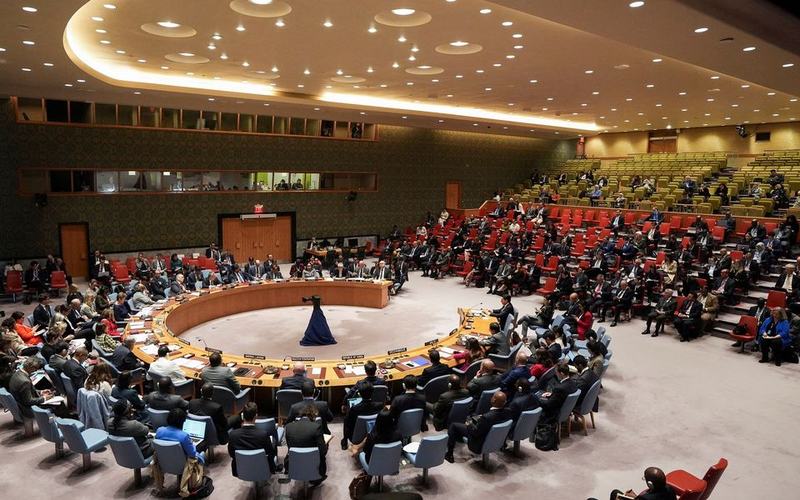
UN Security Council, Reuters
Published: November 16th 2022
© stopchildabuse.gr
READ ALSO
- 12/10/2026 Why don't children report abuse before they turn 18?
- 28/09/2026 Believe the children
- 03/12/2024 Urgent recommendation from GREVIO to Greece
- 22/03/2024 Prosecutor Maria-Eleni Nikolou and the patriarchal class courts.
- 08/10/2023 Legal rules establishing the obligation to report child abuse and neglect
- 08/10/2023 History Taking in Sexual Abuse: Anatomical Dolls
On March 17, 2022, at the 66th session of the UN Commission on the Status of Women (CSW), the Special Rapporteur on violence against women, Reem Alsalem, convened a working group with the goal of having the commission openly declare its opposition to the use of the dangerous, regressive theory of "parental alienation" in child custody court cases. In the working group, which included many distinguished expert witnesses from the international legal and academic community, the serious risks to the safety and best interest of the child arising from the widespread use of the theory of "parental alienation" in legal proceedings were discussed.
In the working group's introductory note we read: In recent decades, the concept of "parental alienation" or "parental alienation syndrome" has been used very frequently in custody trials, especially when a child expresses fear of or displays avoidant behavior toward a parent. Despite the lack of reliable scientific evidence and despite the fact that the World Health Organization has removed the concept from its index, it continues, explicitly or implicitly, to serve as a point of reference in international judicial systems, with serious consequences for the rights of women and children.
According to the theory of "parental alienation," a child's fear of and avoidant behavior toward the non-preferred parent, after separation or divorce, is attributed to manipulation by the preferred parent aimed at turning the child against the other parent. The alleged indicators of "alienation" include the child's resistance to contact with one parent, the child's strong preference for or alliance with the other parent, the child's hostile attitude toward the extended family of the "alienated" parent, and seemingly "trivial" reasons for the child's avoidant behavior.[1]
Although contemporary proponents of the theory use gender-neutral language, the overwhelming majority of "parental alienation" claims concern women, especially when there are allegations of domestic violence against the women themselves or their children. Due to existing gender-based discrimination against women, courts very often consider women less credible when they report domestic violence than they consider men when they deny it. Moreover, allegations of domestic violence are treated as an attempt to obstruct contact between father and child. In these cases, judges attach exceptional importance to the father's right to contact with the child and often punish the mother (even with loss of parental responsibility or imprisonment) for allegedly obstructing contact. Even in countries where the use of the theory of "parental alienation" has been banned in legal proceedings, court decisions often resort to its logic and reasoning, even if only implicitly.
It is particularly worrying that, in the name of protecting children, these court decisions often end up exposing them to even greater danger by granting custody to the abusive parent. In many cases, in custody court proceedings, children who report abuse by the father are not heard, while their feelings and testimonies are treated as the product of suggestion. Even a child's denial of having been manipulated is treated as an indication of "alienation." As a result, the best interest of the child to be free from violence is violated, in accordance with the terms of the UN Convention on the Rights of the Child (Article 19.1),[2] and serious allegations of physical and sexual abuse are not adequately assessed or investigated. In fact, research shows that women are more likely to lose custody of their children if they claim that the father was abusive toward their child than when they report violence against themselves.[3]
In 2019, following a meeting of the Assembly of Independent Expert Mechanisms on the elimination of discrimination and violence against women, chaired by the Special Rapporteur on violence against women, the experts issued a joint statement on the correlation between violence against women and child custody. The experts argued that domestic violence against women should be a determining factor in deciding child custody and discouraged the misuse of "parental alienation" and similar concepts which result in depriving mothers of custody of their children and granting it to fathers accused of domestic violence. This position reinforces the existing case law and standards developed by the mechanisms on the issue of domestic violence.
FOOTNOTES
- These eight criteria for distinguishing the "alienated" child from the abused child are not based on reliable empirical data and should therefore not be used when assessing the safety and best interest of the child. They constitute subjective clinical observations by "experts," and could equally serve as criteria for the existence of abuse. More here.
- UN Convention on the Rights of the Child, Article 19:
1. States Parties shall take all appropriate legislative, administrative, social and
educational measures to protect the child from all forms of physical or mental
violence, injury or abuse, neglect or negligent treatment, maltreatment or
exploitation, including sexual abuse, while in the care of parent(s), legal guardian(s) or any other person who has the care of the child.
2. Such protective measures should, as appropriate, include effective
procedures for the establishment of social programmes to provide necessary support for the child and for those who have the care of the child, as well as for other forms of prevention and for identification, reporting, referral, investigation, treatment and follow-up of instances of child maltreatment described heretofore, and, as appropriate, for judicial involvement.
- Joan Meier, who participated in the Assembly's working group, conducted a landmark study analyzing the outcomes of more than 2,000 court decisions. The findings of this study showed that when mothers report abuse of their children, judges tend not to find their testimony credible. "Courts are skeptical of mothers' claims of abuse by fathers; this skepticism is greatest when mothers claim child abuse. The findings also confirm that fathers' cross-claims of parental alienation increase (virtually doubling) courts' rejection of mothers' abuse claims, and mothers' losses of custody to the father accused of abuse. In comparing court responses when fathers accuse mothers of abuse, a significant gender difference is identified. Finally, the findings indicate that where Guardians Ad Litem or custody evaluators are appointed, unfavorable outcomes for mothers and gender differences are increased" (link to the study below in the bibliography).
BIBLIOGRAPHY / SOURCES
Link to the announcement from the UN Commission on the Status of Women
Link to the UN Convention on the Rights of the Child
Meier, Joan S. and Dickson, Sean and O'Sullivan, Chris and Rosen, Leora and Hayes, Jeffrey, Child Custody Outcomes in Cases Involving Parental Alienation and Abuse Allegations (2019). GWU Law School Public Law Research Paper No. 2019-56; GWU Legal Studies Research Paper No. 2019-56. Link
Machine-assisted translation, reviewed and edited by a human.
READ ALSO
- 12/10/2026 Why don't children report abuse before they turn 18?
- 28/09/2026 Believe the children
- 03/12/2024 Urgent recommendation from GREVIO to Greece
- 22/03/2024 Prosecutor Maria-Eleni Nikolou and the patriarchal class courts.
- 08/10/2023 Legal rules establishing the obligation to report child abuse and neglect
- 08/10/2023 History Taking in Sexual Abuse: Anatomical Dolls