Parental Alienation: the repugnant, profitable "industry" with the child as victim
Published: November 3rd 2022
© stopchildabuse.gr
READ ALSO
- 12/10/2026 Why don't children report abuse before they turn 18?
- 28/09/2026 Believe the children
- 03/12/2024 Urgent recommendation from GREVIO to Greece
- 22/03/2024 Prosecutor Maria-Eleni Nikolou and the patriarchal class courts.
- 08/10/2023 Legal rules establishing the obligation to report child abuse and neglect
- 08/10/2023 History Taking in Sexual Abuse: Anatomical Dolls
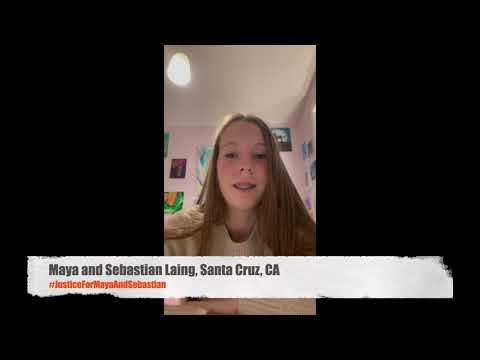
On October 21, 2022, two children aged 11 and 15, Sebastian and Maya Laing, were violently abducted from their home in California, where they lived with the parent they felt safe with [1], in order to attend—by court order—one of the so-called reunification therapies at a private clinic, aimed at reconnecting them with their "alienated" parent. The alienated parent in this case was the mother, who, in a custody court case, accused the children's father of "parental alienation" in response to an allegation that she herself was abusing the children, ultimately winning the case.Content warning: child abuse, child abduction.In court, Lynn Steinberg testified as an expert witness—a self-proclaimed "expert" on "parental alienation" and a highly influential figure in the international movement supporting the theory of "parental alienation".In this case, the judge, completely disregarding the children's testimony that they had suffered abuse from their mother, as well as their strong wish to remain with their father, decided that the children should undergo "reunification therapy" before moving in with their mother.
The private clinic in Los Angeles, to which the children were forcibly transported by employees of a private company in order for the "therapy" to take place, belongs to Lynn Steinberg herself—the same person who testified as an "expert" witness in the custody case concerning the children. These so-called "reunification therapies" last anywhere from four to ninety days—depending on their effectiveness—and their cost, which is borne by the parent accused of "parental alienation", starts at $20,000. If nothing else, it is a particularly lucrative business for the "experts" who deal with parental alienation. Children placed in these clinics are forbidden from going outside and, of course, are forbidden from seeing the parent who is supposedly the one who alienated them from the other parent. There, according to survivors' testimonies, they are subjected to degrading treatment, including punishments, threats, food deprivation, and psychological warfare, in order to change their attitude toward the parent they have accused of abusing them.
In an earlier video (a report on US Family Courts by Lilia Luciano, a journalist for ABC 10), Lynn Steinberg had stated that allegations of sexual abuse are false 90% of the time: an arbitrary belief that forms the foundation of the theory of "parental alienation".Lynn Steinberg's interview with Lilia Luciano as part of her report on US Family Courts and the misuse of the theory of "parental alienation".JTNDaWZyYW1lJTIwd2lkdGglM0QlMjI1NjAlMjIlMjBoZWlnaHQlM0QlMjIzMTUlMjIlMjBzcmMlM0QlMjJodHRwcyUzQSUyRiUyRnd3dy55b3V0dWJlLmNvbSUyRmVtYmVkJTJGalBKd01fcEhZX0klM0ZzdGFydCUzRDI3MyUyMiUyMHRpdGxlJTNEJTIyWW91VHViZSUyMHZpZGVvJTIwcGxheWVyJTIyJTIwZnJhbWVib3JkZXIlM0QlMjIwJTIyJTIwYWxsb3clM0QlMjJhY2NlbGVyb21ldGVyJTNCJTIwYXV0b3BsYXklM0IlMjBjbGlwYm9hcmQtd3JpdGUlM0IlMjBlbmNyeXB0ZWQtbWVkaWElM0IlMjBneXJvc2NvcGUlM0IlMjBwaWN0dXJlLWluLXBpY3R1cmUlMjIlMjBhbGxvd2Z1bGxzY3JlZW4lM0UlM0MlMkZpZnJhbWUlM0U=When asked by the journalist how she distinguishes an "alienated" child from an abused child, and specifically, how she diagnoses that an allegation of sexual abuse is false (Lynn Steinberg's own claimed specialty), especially when the child itself has spoken about their sexual abuse, she gives the following answer:
Lynn Steinberg: "The abused child does not reject their abuser; they want to maintain their relationship with the parent who has abused them, they want to go back to their abuser"
Journalist: "And does that happen in all cases?"
Lynn Steinberg: "Yes, I'd say in 90% of cases. You understand the 'alienated' child, because they are convinced that the 'alienated' parent is bad and the 'alienating' parent is good"
Journalist: "Even when the child has disclosed that the parent abuses them, physically, psychologically, sexually, that they touch them in ways they shouldn't?"
Lynn Steinberg: "These cases, of sexual abuse, are my specialty. You can do research and discover the truth. For example, I was talking to a father who had been accused of sexually abusing his daughter. I knew he was diabetic and therefore couldn't get an erection and... he would never want to do that to his daughter anyway"
Journalist: "How do you know he couldn't get an erection?"
Lynn Steinberg: "He had confided that to me; that's a symptom of people who have diabetes."
Journalist: "Wait a minute, are you saying that people with diabetes don't have erections?"
Lynn Steinberg: "Yes, when it's more severe, they don't"
Needless to say, erectile dysfunction is not a necessary symptom of people suffering from diabetes, and it certainly does not constitute a factor that rules out allegations of sexual abuse.
Steinberg's views, however, sum up the essence of the controversy surrounding the pseudo-scientific theory of "parental alienation": its danger when used in situations involving children at risk, which, often with the contribution of self-proclaimed "experts", end up placing them in the custody of their abusers.Statistics on child sexual abuseIn the text of the National Action Plan for the Protection of Children from Sexual Abuse and Exploitation 2022-2027 we read that:
"According to official Council of Europe data, 1 in 5 children falls victim to some form of sexual abuse or exploitation. In Greece, according to available research data (2011) from the Institute of Child Health (I.C.H.), the rate stands at 16%, while for 7.6% of children these traumatic childhood experiences involve sexual violence with physical contact, and for 3% of these, rape or attempted rape. According to the Council of Europe and the World Health Organization, 9 out of 10 perpetrators come from the child's close family, relatives, or friends. This makes addressing the phenomenon more difficult, as child victims are often emotionally coerced, frightened, misled, and discouraged from speaking about what is happening to them. Very few incidents reach the authorities: in the same study by the Institute of Child Health, the incidents recorded as reaching not only prosecutorial and police authorities but also any other health, welfare, or educational body, whether governmental or non-governmental, amounted to just 0.07% of estimated cases—a rate corresponding to fewer than 2 in 100 child victims of sexual abuse. The remaining incidents are covered by silence, and, particularly among the most vulnerable categories of children, reporting rates are even lower. According to a review of the international literature, forensic physical findings are present in less than 5% of cases."
The above data make it more than clear that we need to empower children so they can report the abuse they suffer. According to the principles of child-friendly justice, there is an obligation on the judicial system to seriously take into account the views of children. An obligation that runs contrary to the basic principles of the theory of "parental alienation", and especially to the theory's arbitrary insistence that most allegations of domestic violence and sexual abuse are false.A pseudo-scientific theory that is dangerous for children has no place in legislation.Since 1980, when "parental alienation" first appeared in the USA, characterized as a "syndrome" by Richard Gardner, up to today, there is still no unified scientific or clinical definition (Johnston and Sullivan 2020). There is still neither a scientific diagnostic method nor reliable empirical data supporting the existence of a syndrome or disorder of parental alienation in children, let alone one with long-term effects. There are only hypotheses based on subjective clinical observation by "experts" (Mercer 2021), of questionable ethical and professional credibility, such as that of Lynn Steinberg.
When experts are asked how they distinguish "alienated" children from abused children, they cite a series of arbitrary criteria. One such criterion, as Lynn Steinberg mentions above, is that abused children tend not to reject their abuser and wish to maintain their relationship with him, while "alienated" children do the opposite—that is, they reject their abuser and align with the safe parent.
Based on this arbitrary assumption, "parental alienation" "experts" conclude that children who reject their alleged abuser have not truly suffered abuse and that their testimonies are false or fabricated, the result of brainwashing by the safe parent [2].
This argument is reproduced in the literature by the leading contemporary proponents of parental alienation, such as Richard Warshak, Amy Baker, Jennifer Harman, William Bernett, Demosthenes Lorandos, among others—names cited in all the "scientific" articles on the subject, and here, unfortunately, in Greece as well, by the local "experts" on parental alienation (here in detail on why the argument is flawed).
The theory of "parental alienation" is proven to be pseudo-scientific precisely because it is not based on any scientific diagnostic method, nor on reliable empirical data. It has not been approved by any official body. On the contrary, countless bodies and organizations (UN, WHO, APA, EAP, UK Ministry of Justice, Italian Supreme Court, etc.) recommend avoiding its use, especially in custody court cases, precisely because it poses serious risks to children's safety, as victims' testimonies about abuse—when parental alienation is invoked—are as a rule disregarded.
"Parental alienation" has given rise to a particularly oppressive and profitable market with children as its victims, who often end up with their abusers after going through particularly traumatic and very expensive reunification "therapies".
Many parties benefit from the growth of the oppressive commercialization of "parental alienation". Lawyers who offer services to alienated parents, psychologists and self-proclaimed experts who supposedly specialize in "parental alienation" and sell services, and finally, the abusers themselves, who are rewarded by a system that undermines the concept of the best interest of the child, condemning it to endless torment.
In Greece, various men's rights organizations, as well as supporters of the theory of "parental alienation", are pressuring the Ministry of Justice to include "parental alienation" in the upcoming revision of the domestic violence law. Part of their strategy is to create a climate in the press and on social media suggesting that most allegations of domestic violence and sexual abuse are false. This is, of course, an arbitrary assumption that also forms the basis of the theory of "parental alienation". Supporters of the theory of "parental alienation", precisely because they know that no official body recognizes this pseudo-scientific belief system, and moreover because no statistical data exists to support it, are fighting for its legislative recognition, so as to manage to impose it despite the lack of scientific documentation.
It is characteristic that they circulate unsubstantiated slogans on social media to create impressions, such as the claim that "parental alienation is child abuse"!
Child abuse is forcibly snatching a child away from their safe parent.
Child abuse is dismissing children's testimonies about abuse and condemning them to spend time with their abuser.
We will not stop defending children's rights.
The pseudo-scientific theory of "parental alienation" has no place either in courtrooms or in legislation.
Footnotes
[1] Safe / Protective Parent: the safe or protective parent seeks to ensure the best interest of the child by limiting their contact with the alleged abuser, who is seeking more contact or even sole custody (translated as Protective / Safe Parent).
[2] In these formulations, the Cold War-era argumentation of the 1980s regarding the implantation of false memories as a weapon of war is evident
Bibliography | Sources
National Action Plan for the Protection of Children from Sexual Abuse and Exploitation 2022-2027
FOOTNOTES
- Ασφαλής / Προστατευτικός Γονέας: o ασφαλής ή προστατευτικός γονέας επιδιώκει να διασφαλίσει το βέλτιστο συμφέρον του παιδιού περιορίζοντας την επικοινωνία του με τον φερόμενο ως κακοποιητή, ο οποίος διεκδικεί περισσότερη επικοινωνία ή ακόμα και την αποκλειστική επιμέλεια (μτφ. Protective / Safe Parent).
- Σε αυτές τις διατυπώσεις είναι εμφανής η ψυχροπολεμική επιχειρηματολογία της δεκαετίας του ‘80 περί εμφύτευσης ψευδών αναμνήσεων ως εργαλείο πολέμου
BIBLIOGRAPHY / SOURCES
Machine-assisted translation, reviewed and edited by a human.
READ ALSO
- 12/10/2026 Why don't children report abuse before they turn 18?
- 28/09/2026 Believe the children
- 03/12/2024 Urgent recommendation from GREVIO to Greece
- 22/03/2024 Prosecutor Maria-Eleni Nikolou and the patriarchal class courts.
- 08/10/2023 Legal rules establishing the obligation to report child abuse and neglect
- 08/10/2023 History Taking in Sexual Abuse: Anatomical Dolls